Cart
0
You may also like


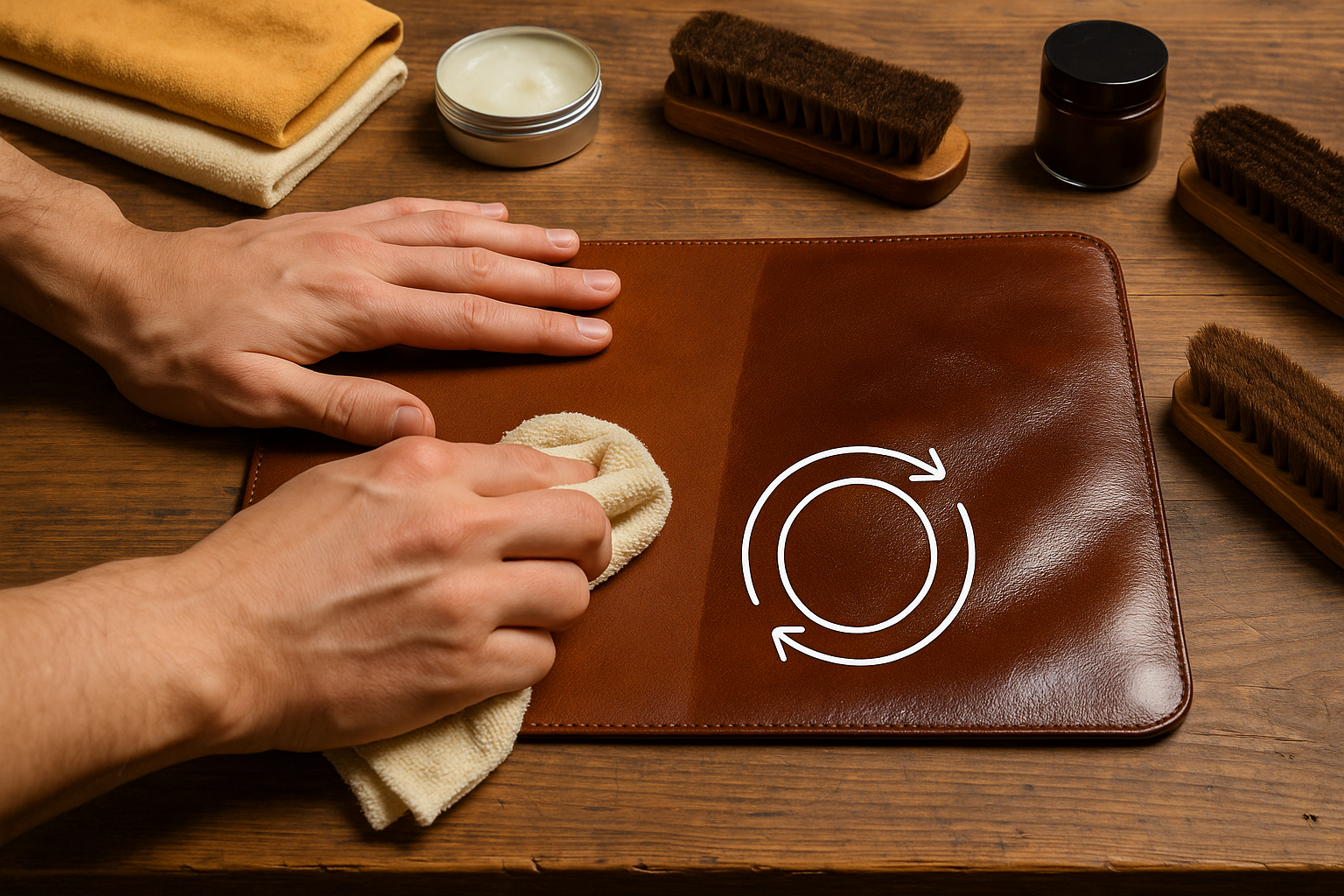
A leather jacket’s charm lies in its smooth surface and subtle shine. But with daily wear, that shine can fade. Instead of turning to harsh polishing chemicals, try buffing techniques that restore natural shine while keeping your leather healthy and long-lasting.
Removes surface dust and dirt.
Revives the natural oils in leather.
Enhances a polished yet authentic shine.
Clean the Surface First
Use a mild leather cleaner to remove dirt and buildup.
Choose the Right Cloth
A soft microfiber or cotton cloth is ideal for buffing.
Apply a Light Conditioner or Balm
Add moisture and flexibility before buffing.
Buff in Circular Motions
Use gentle pressure, moving in small circles to bring out shine.
Polish with a Dry Cloth
Finish with a fresh, dry cloth for a smooth, glossy finish.
Microfiber Cloths: Gentle and effective.
Horsehair Brushes: Great for removing dust and giving a soft shine.
Buffing Pads: Ideal for deep restoration.
Avoid over-buffing, which can make leather look artificial.
Always test conditioners on a small area first.
Buff regularly (once a month) to maintain a polished look.
Q1: Can I buff leather without using conditioner?
Yes, but using a light conditioner enhances the shine and prevents dryness.
Q2: How often should I buff my leather jacket?
Once every 4–6 weeks is ideal for regular use.
Q3: Is buffing the same as polishing?
No, buffing restores natural shine, while polishing adds artificial gloss.
Q4: Can I use a shoe brush for leather jackets?
Yes, a soft horsehair brush works well for buffing jackets.
Q5: Will buffing remove scratches?
Light buffing can minimize small scratches, but deeper marks may need repair creams.